My generation, the baby boomers, are arguably the most celebrated generation in American history. Time Magazine named us Person of the Year in 1966. As youths we fostered peace, love and understanding principally by helping to end the Vietnam War, and we played an influential role in the civil rights and environmental movements. But, did we live up to the high ideals we preached in the four decades since then?
As young people, we vehemently criticized all institutions of power from our parents to government. The lyrics of Bob Dylan’s The Times They Are a-Changin’ characterized what appeared to be the pervasive sentiment of the baby boomers at the time when he said the “old road” of our “mothers and fathers” is “rapidly agin.”
But, did we really abandon the “old road” of our parents, and take a “new one”? Now that we have occupied the seats of power in government, business, academia, and media, and are transitioning to our golden years, it’s the ideal time to evaluate ourselves by the same standards we judged our parents.
The centerpiece of our legacy to date has to be the peace movement. However, although the Vietnam War was brought to an end, the U.S. has essentially remained in international conflicts ever since including Beirut, Grenada, Panama, the Gulf War, Somalia, Bosnia, Afghanistan, and Iraq. And, if truth be told, we had an ulterior motive in our protests of the Vietnam War. Our necks were in the noose since the military draft was still in full effect and any one of us could suddenly find ourselves fighting an unpopular war in the jungles of Southeast Asia. Once the draft ended, war suddenly became more palatable and collectively the baby boomers fell silent in the face of war ever since.
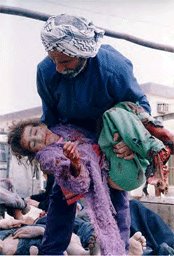
While American deaths have plummeted since Vietnam largely due to weak adversaries, smart weapons, and quicker and better battlefield medical attention; civilian mortality rates are disturbingly high. We were outraged by events that unfolded in My Lai, yet civilian deaths in Iraq alone are estimated to be well over 100,000 since 2003, even by U.S. government measurements. The folly and futility of the Vietnam War are now being replayed simultaneously in Iraq and Afghanistan.
The record of racial equality in America is also a bit disappointing. Although the 1960’s brought about desegregation, the plight of people of color has not improved much in the decades that followed. The gap between rich and poor has only grown more pronounced, and the digital divide makes the disadvantaged ever more challenged.
Our incarceration rate is the highest in the world. In 2005, for the first time in our history, more than one in 100 Americans was behind bars with a disproportionate amount being people of color. According to the U.S. Bureau of Justice Statistics non-Hispanic blacks accounted for 39.4% of the total prison and jail population in 2009, even though they represented only 13.6% of the U.S. population according to the 2010 census. One in nine black men between the ages of 20 and 34 are behind bars.
Today we teeter on repealing or amending much of the environmental legislation of the past four decades at the expense of the environment and to the benefit of big business. We have shunned global efforts that deal with atmospheric threats refusing to support the Convention on Biodiversity treaty at the Earth Summit in 1992 and the Kyoto Protocol in 1997. 193 nations ratified the former and the U.S. remains the only signatory out of 192 nations not to have ratified the latter.
All-in-all we have behaved no differently than our parents. Our lofty aspirations and criticism of our parents’ generation were hypocritical in light of what we accomplished. War is pervasive as ever, the plight of people of color is still alarming, and we shun world and scientific opinion in the face of the greatest environmental threats mankind ever confronted. Some of the problems that remain as we fade into our senior years may not be entirely of our doing, but much of it is. Given that we preached such high ideals and lambasted our parents in the process, I think all of us baby boomers owe our parents an apology, not because our principles were wrong, but because we were wrong about ourselves.
As young people, we vehemently criticized all institutions of power from our parents to government. The lyrics of Bob Dylan’s The Times They Are a-Changin’ characterized what appeared to be the pervasive sentiment of the baby boomers at the time when he said the “old road” of our “mothers and fathers” is “rapidly agin.”
But, did we really abandon the “old road” of our parents, and take a “new one”? Now that we have occupied the seats of power in government, business, academia, and media, and are transitioning to our golden years, it’s the ideal time to evaluate ourselves by the same standards we judged our parents.
The centerpiece of our legacy to date has to be the peace movement. However, although the Vietnam War was brought to an end, the U.S. has essentially remained in international conflicts ever since including Beirut, Grenada, Panama, the Gulf War, Somalia, Bosnia, Afghanistan, and Iraq. And, if truth be told, we had an ulterior motive in our protests of the Vietnam War. Our necks were in the noose since the military draft was still in full effect and any one of us could suddenly find ourselves fighting an unpopular war in the jungles of Southeast Asia. Once the draft ended, war suddenly became more palatable and collectively the baby boomers fell silent in the face of war ever since.
While American deaths have plummeted since Vietnam largely due to weak adversaries, smart weapons, and quicker and better battlefield medical attention; civilian mortality rates are disturbingly high. We were outraged by events that unfolded in My Lai, yet civilian deaths in Iraq alone are estimated to be well over 100,000 since 2003, even by U.S. government measurements. The folly and futility of the Vietnam War are now being replayed simultaneously in Iraq and Afghanistan.
The record of racial equality in America is also a bit disappointing. Although the 1960’s brought about desegregation, the plight of people of color has not improved much in the decades that followed. The gap between rich and poor has only grown more pronounced, and the digital divide makes the disadvantaged ever more challenged.
Our incarceration rate is the highest in the world. In 2005, for the first time in our history, more than one in 100 Americans was behind bars with a disproportionate amount being people of color. According to the U.S. Bureau of Justice Statistics non-Hispanic blacks accounted for 39.4% of the total prison and jail population in 2009, even though they represented only 13.6% of the U.S. population according to the 2010 census. One in nine black men between the ages of 20 and 34 are behind bars.
Today we teeter on repealing or amending much of the environmental legislation of the past four decades at the expense of the environment and to the benefit of big business. We have shunned global efforts that deal with atmospheric threats refusing to support the Convention on Biodiversity treaty at the Earth Summit in 1992 and the Kyoto Protocol in 1997. 193 nations ratified the former and the U.S. remains the only signatory out of 192 nations not to have ratified the latter.
All-in-all we have behaved no differently than our parents. Our lofty aspirations and criticism of our parents’ generation were hypocritical in light of what we accomplished. War is pervasive as ever, the plight of people of color is still alarming, and we shun world and scientific opinion in the face of the greatest environmental threats mankind ever confronted. Some of the problems that remain as we fade into our senior years may not be entirely of our doing, but much of it is. Given that we preached such high ideals and lambasted our parents in the process, I think all of us baby boomers owe our parents an apology, not because our principles were wrong, but because we were wrong about ourselves.